

dLocal’s Q1 2026 Results Show How Emerging Markets Payments Infrastructure Is Scaling Globally
dLocal’s Q1 2026 results highlight how fast emerging market payment infrastructure is scaling globally. TPV surpassed $14B as demand for local collections, payouts, and cross-border settlement continues growing across Africa, Asia, and LatAm.
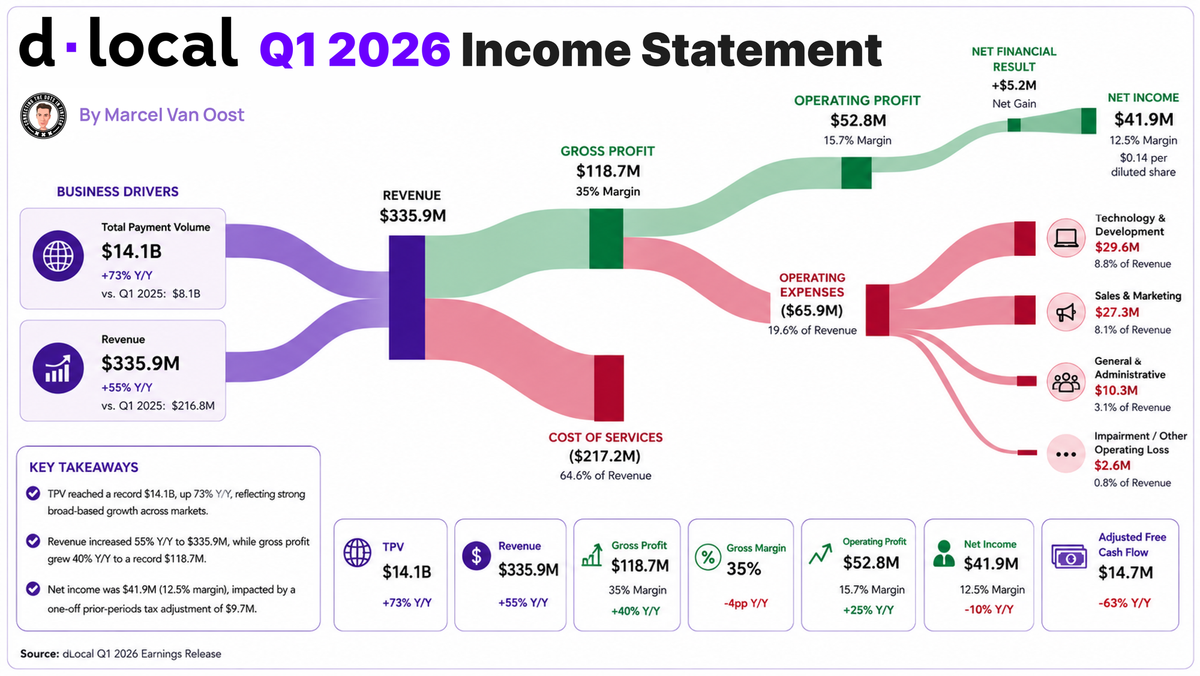
One thing that stands out in dLocal’s Q1 2026 results is how much demand still exists for local payment infrastructure across emerging markets.
The company processed more than $14B in TPV this quarter, which is a huge jump from last year and also the sixth quarter in a row with TPV growth above 50%.
Some of the main numbers:
- $14.1B TPV (+73% YoY)
- $335.9M revenue (+55%)
- $118.7M gross profit (+40%)
- $57.2M operating profit excluding tax adjustments (+25%)
- $51.6M adjusted net income
- $451.8M corporate cash balance
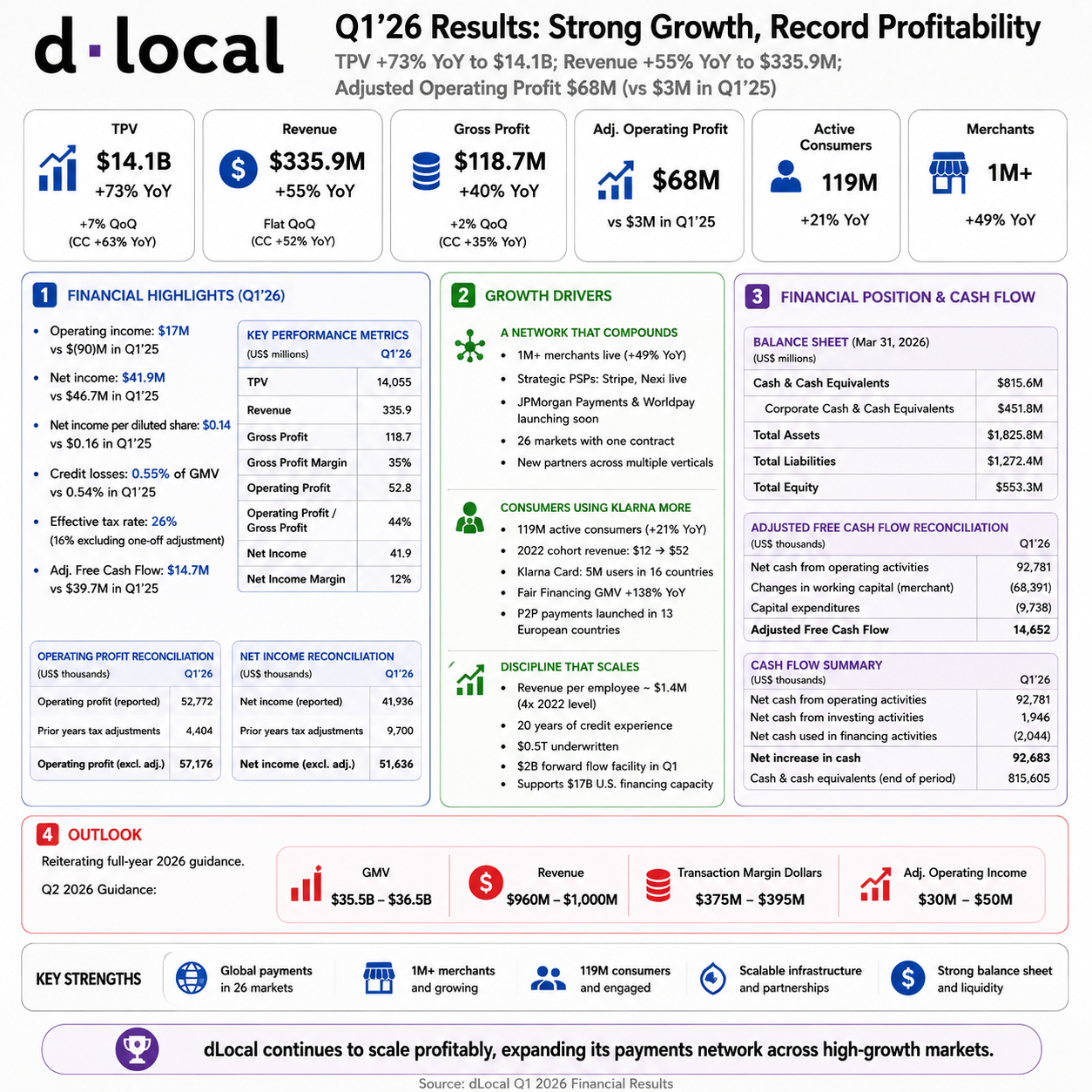
A big part of the growth this quarter came from markets that usually don’t get much attention in global payments reports. dLocal highlighted strong activity across countries like Nigeria, Mozambique, and Vietnam, while Argentina continued to process significant volumes as well.
You can also see that dLocal is moving deeper into local infrastructure, not just payment processing. That became pretty obvious from some of the recent partnerships they announced.
In South Africa, dLocal partnered with inDrive to support local card payments and real-time driver payouts through PayShap. And in APAC, they partnered with Damisa around cross-border settlement using local payment rails together with stablecoin infrastructure.
That second partnership is especially interesting because it shows where part of the market is heading. Stablecoins are increasingly being used behind the scenes for settlement and liquidity movement rather than as visible consumer payment products.
Overall, the quarter shows that merchants still want the same thing in emerging markets: reliable local collections, fast payouts, easier settlement, and less operational complexity. And companies building that infrastructure continue to benefit from it.
Sources:

Comments ()